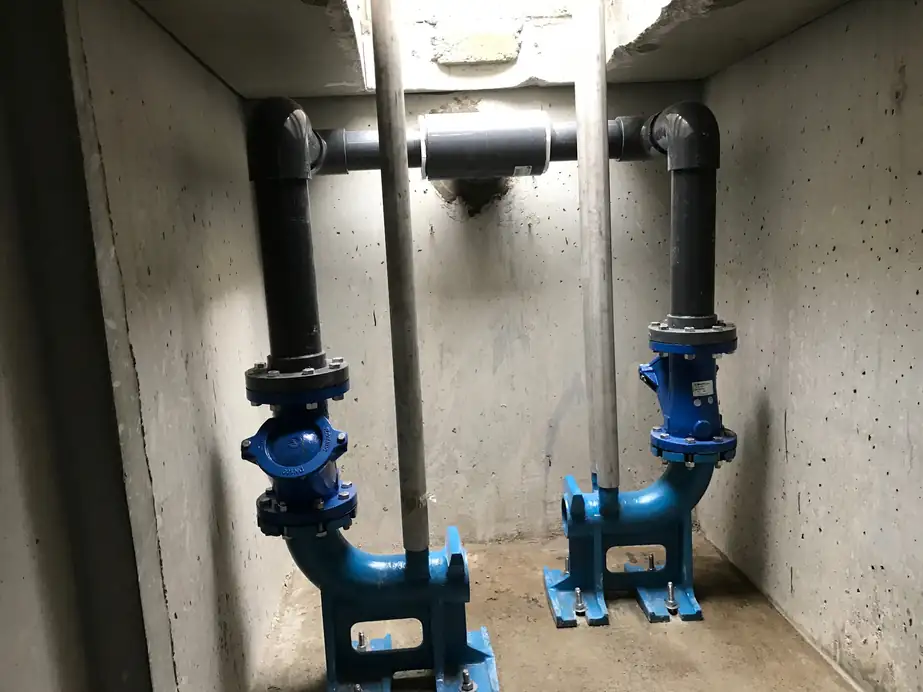
PUMP CHAMBER · SELAH, WA
Septic pump repair and replacement, tank to duplex vault
Float switches, impellers, motors, wiring and alarms, repaired or replaced and run before the crew leaves. Homes and commercial sites across Yakima, Ellensburg, Selah and the Tri-Cities.
Chapter 01
What goes wrong with a septic pump
A pump is the part of the system with moving parts and wiring, so it is the part that wears out. The simple failures are a damaged float switch, which tells the pump when to run, or a clogged impeller. Both can often be repaired.
The bigger failures are a burnt-out motor or a severely damaged housing. Those usually mean replacement. Alarm faults sit in the same group: when the alarm is silent or going off for no reason, the system has lost its warning.
From the house you rarely see any of this. What you see is the alarm, water that is slow to drain, or a system that has stopped moving effluent where it should go.
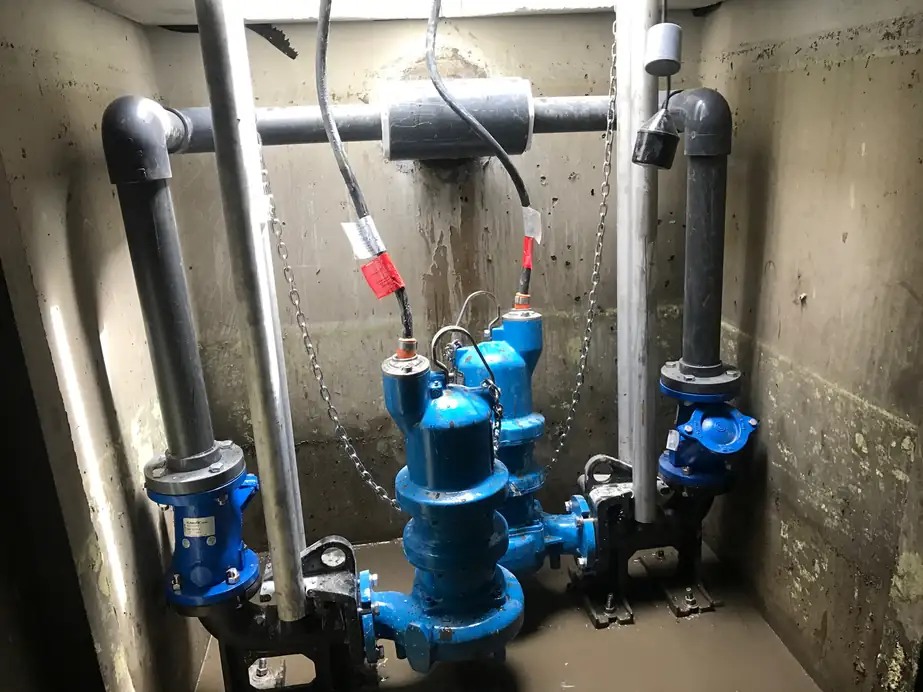
Two blue septic pumps and grey PVC plumbing inside a concrete pump vault on a commercial job
Locate it, pull it, inspect it, run it
The crew assesses the pump and the whole system first, then locates the pump in the tank or the separate pump chamber. Taking it out can mean pumping down the tank and excavating around it.
Once it is out, everything gets inspected: the pump itself, the electrical connections, the floats and the alarm. A float or an impeller is repaired. A burnt-out motor is replaced. Either way, the new or repaired pump is connected, lined up and positioned in the chamber, and the openings are sealed so nothing leaks.
Before the crew leaves, the pump is run by hand and the system is checked for leaks or faults. If the tank had to be emptied to reach it, the pumping and cleaning page explains that side of the job.
Chapter 03
Keeping the pump alive after it is back in
Pumps last longer when somebody looks at them. That means periodic inspection, cleaning the filters and components, and dealing with small faults before they become a burnt-out motor. The alarm does the watching between visits, so it is worth treating its sound as information.
One customer with an 83 year old septic system called it a problem handled in a couple of days, from the receptionist to the people who diagnosed it to the people who fixed it. A pump inspection fits naturally into the regular septic tank inspection, which our own guideline sets at every 1 to 3 years.
“They took care of my problem on just a couple of days.” Dan Wilson, Google review, about his 83 year old septic system.
Pump chamber · where the pump lives
Tank, pump chamber, floats and alarm
- In the septic tank
- On some systems the pump sits in the tank itself, so reaching it can mean exposing the lids and pumping the tank down first.
- In a separate pump chamber
- On others the pump lives in a chamber of its own. Finding which one you have is the first job before any repair is planned.
- Floats and alarm
- Floats switch the pump on and off as the water level moves, and the alarm tells you about high water or a pump failure. Both get checked whenever a pump comes out.
Commercial sites are on our list too. We handle commercial duplex pump vaults, the kind with two pumps sharing one concrete vault, alongside the home systems that come with a new site design and installation.