SEPTIC REPAIRS · SELAH, WA
Septic system repairs, found with a camera before anything is dug
Tanks, baffles, pipes, distribution boxes and drainfields, for homes and commercial sites across Yakima, Ellensburg, Selah and the Tri-Cities.
Chapter 01
Where a septic system actually fails
Most of the time the trouble is not the whole system. It is one part of the path from the house to the field: a leak or a cracked wall in the tank, a baffle that has failed, a pipe that has collapsed, a damaged distribution box, or a drainfield that has gone saturated and ponds at the surface.
Tree roots can also get into pipes and block them. The signs you notice first are slow drains, sewage odours, backups in the house, or soggy ground over the drain field, and each one points somewhere different.
That is why a repair that starts with a guess so often costs twice. Fixing the wrong part leaves the real fault in the ground, and the same call comes back in a month.
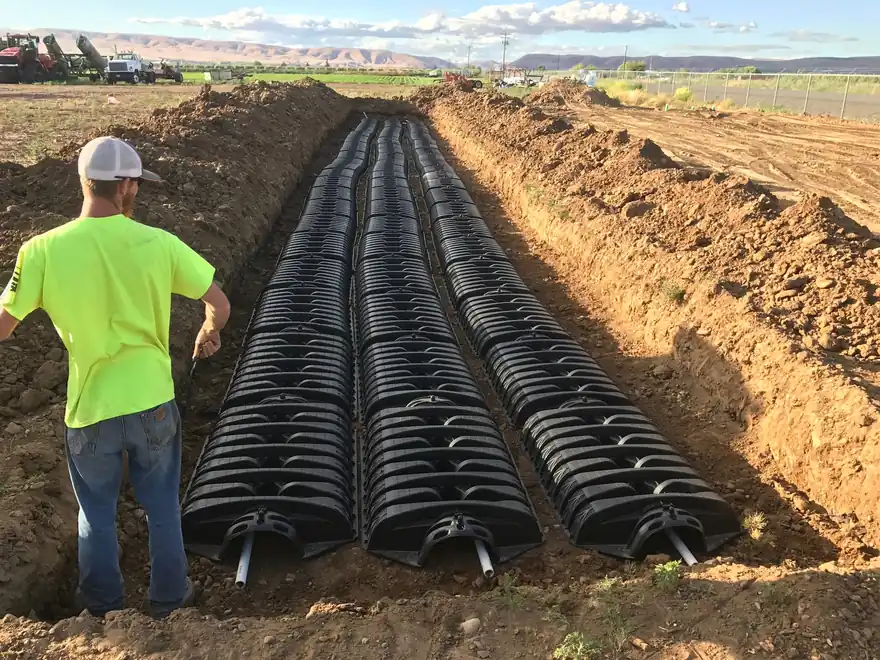
A crew member standing over a double row of black chambers laid in an open trench, Washington Wastewater Solutions
Camera first, then the part that failed
A repair at our Selah office starts with a diagnostic inspection. Wyatt brings a camera and goes into the line, then looks at the tank, the drain field and the distribution box, and explains what he finds in plain terms. Only then is a repair named.
The repair is the part that failed: a patch, a new baffle, a section of pipe, a distribution box, extra drainage lines, or a new field when the old one is finished. One customer arrived with a bid for a very expensive pressurized system from a company that had done little site exploration. Natasha tested and perked two acres instead, found a design that fit the ground, and saved him over $20,000.
When a failed field does need replacing, the work is the same design-and-permit path as a new system. The site design page walks through it, and the installation page shows how the crew sets tanks and chambers.
Chapter 03
After the repair: roots, alarms and a schedule
A repair that ignores why the system failed will fail again. Where roots were the cause, the fix includes root barriers or trimming the trees nearby. Where a high-water or pump problem went unnoticed, an alarm tells you early.
Then comes a maintenance schedule: routine inspections, pumping when the tank needs it, and sensible habits around water use and what goes down the drain. Inspections and pumping each have their own page.
“We had our 30 year old drainfield fail, of course on a weekend. I found Wa Wastewater site on Google and read the reviews. I called. They answered the phone! Wyatt showed up with a camera to go into system.” Kim Cook, Google review.
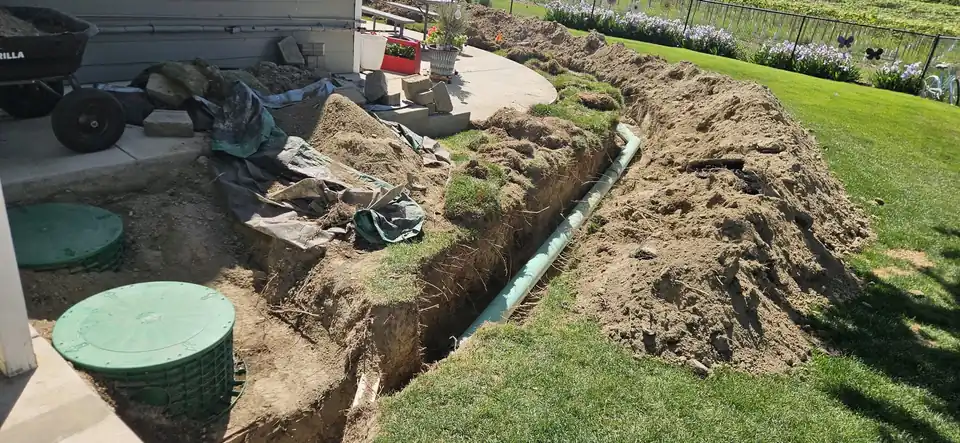
Repair is one end of the work. The other end is the new system the crew puts in when the old one cannot be saved.
Repair index · what we fix, part by part
Seven places a system can need work
- Tank
- Patching leaks, repairing or replacing damaged baffles and fixing cracks in the walls. If the tank is beyond repair, the whole tank is replaced.
- Pipe
- Fixing leaks, clearing blockages, replacing damaged sections and rerouting around the bad stretch, between the tank and the field or inside it.
- Distribution box
- The box that shares wastewater evenly between the drain field lines. If it is damaged or not working, it is repaired or replaced.
- Drain field
- For saturation, ponding or compacted soil: aerating the soil, adding drainage lines or, in severe cases, replacing the whole field.
- Root intrusion
- Roots taken out of the pipes, then root barriers or trimming nearby trees so they do not come back.
- Alarm installation
- An alarm warns of high water in the tank or a pump failure, so a repair happens before the damage grows.
- Regular maintenance
- Routine inspections, pumping as needed, water conservation and care about what goes down the drain.
Not sure which row you are in? Describe what you are seeing to the office on (509) 367-3384, and see the pump repair page if the problem is an alarm or a pump that will not run.