SERVICE · INSTALLATION
New Septic System Installation
One crew sets the tank, lays the field and finishes the ground, working from the design the Yakima Health District approved.
Chapter 01
Where an installation goes wrong
Backfill that was not compacted settles into a dip over the trench, and a dip over a drainfield holds water. A field laid a little shorter or a little shallower than the drawing never tells you so on day one. A tank set without a way to reach it turns every pump-out into an excavation.
None of these are mysterious failures. They are shortcuts taken between the approved design and the finished lawn, and they are the reason we want the crew that digs to be working from the same sheet that Natasha drew.
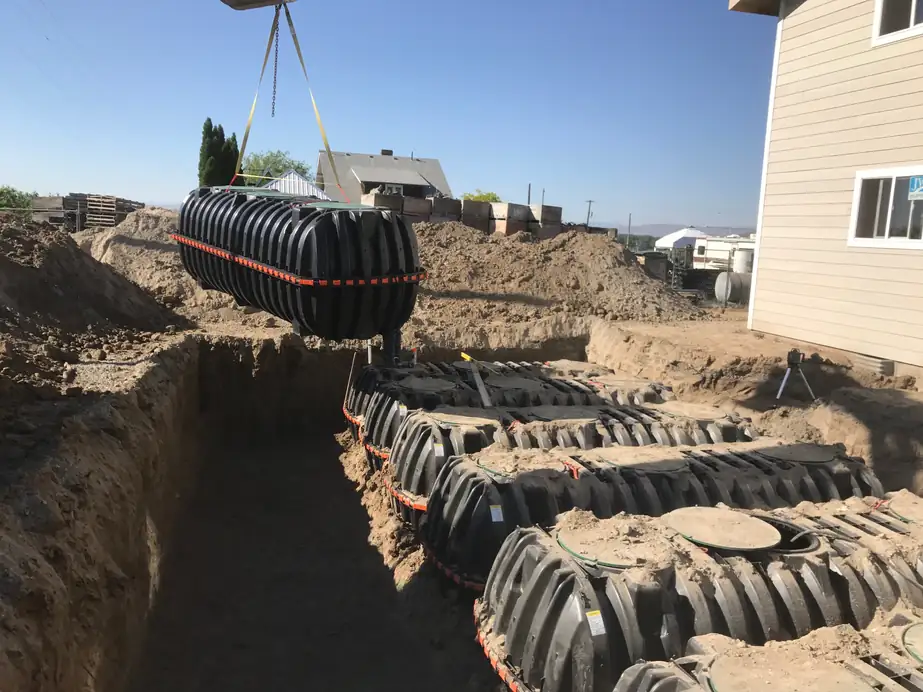
Black poly septic tank on a crane line being lowered toward a chamber trench beside a house
Tank, field, risers, then the inspector
Before any ground is broken the permits and local regulations are in order, and the site evaluation and design are done. Excavation then follows the design: trenches for the drainfield, a hole for the tank, and the distances between them held to the plan. The tank is set by crane, poly or precast concrete depending on the site, and the drainfield goes in as chambers or as perforated pipe in gravel trenches, laid so effluent spreads evenly across the whole field.
Backfill and compaction come next, because stable ground is part of the system. The job ends with a final inspection by the health district, who confirm the install matches the approved design before anything is called finished. If you do not have a design yet, start with our septic site design service.
Selah, Yakima, Ellensburg and the Tri-Cities all fall in the territory the crew works. DJ and the install crew work alongside Natasha, and the office at (509) 367-3384 can tell you where your own job would sit in the schedule.
Chapter 03
After the trucks leave
A system is only finished when the yard is. One Selah homeowner who installed in the middle of winter wrote that the crew worked through the muck without complaint, that they were without septic for less than an hour, and that the crew returned as soon as the ground was dry enough to prep it for new grass.
Then it is yours to look after. Regular pumping removes accumulated solids, grease and harsh chemicals stay out of the drain, and slow drains, odours, backups or soggy ground over the field are the signs to call early. Our inspections and pumping crews keep the maintenance schedule so the new system stays that way.
“We were without septic for less than an hour.” And: “The crew came back as soon as the ground was dry enough and prepped the ground for new grass.” Jacob James, Google review.
The order of the dig
Tank set, field, risers, inspection
Each step happens in this order for a reason: the tank has to be level before the field can be graded to it, and the risers have to be cut to the finished grade. The design sheet decides every dimension before the crane arrives.
1 · Tank set
The tank comes in on a crane line
Poly or precast concrete, lifted into an excavation that was dug to the drawing.
2 · Field
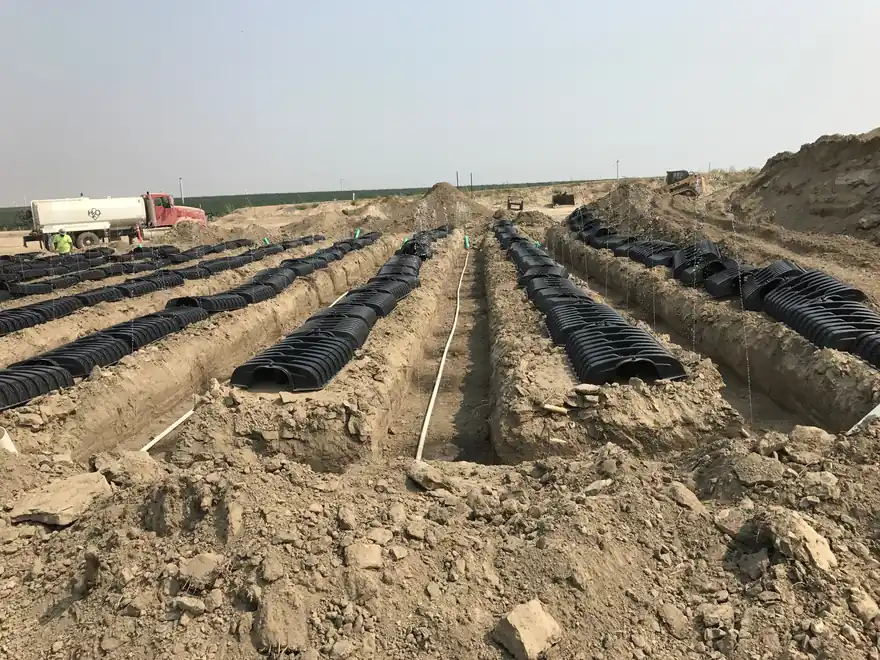
Chambers go down in rows
Chambers or perforated pipe in gravel, set to the length and layout on the plan.
3 · Risers
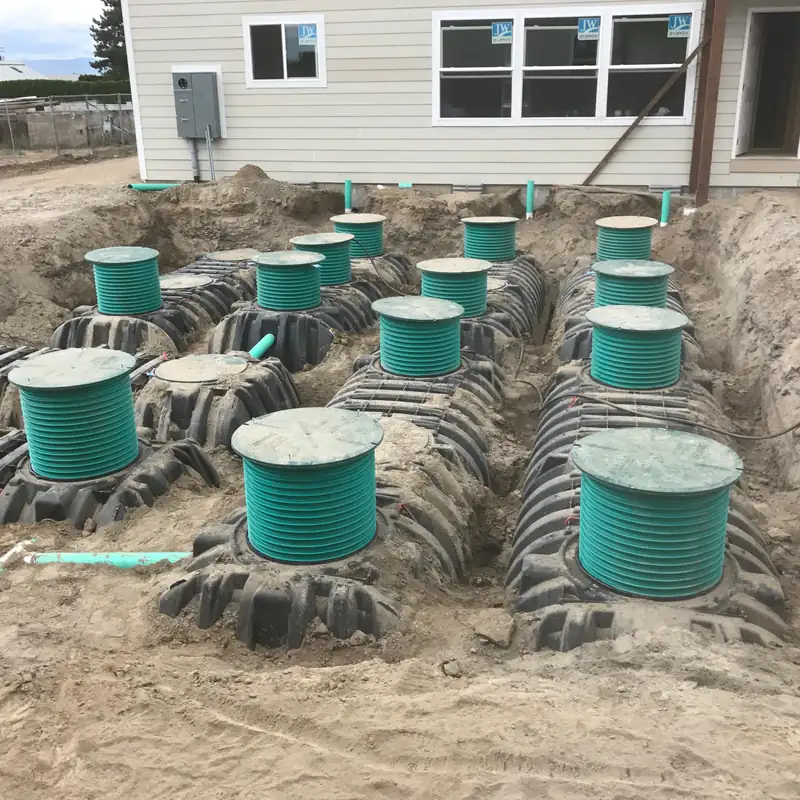
Green lids mark where the access is
Risers bring the tank to the surface so pumping and inspection never need a dig.
4 · Inspection
The health district comes out last. A final inspection checks the install for compliance with regulations and proper function, which can include inspecting the tank for leaks and the integrity of the drainfield.